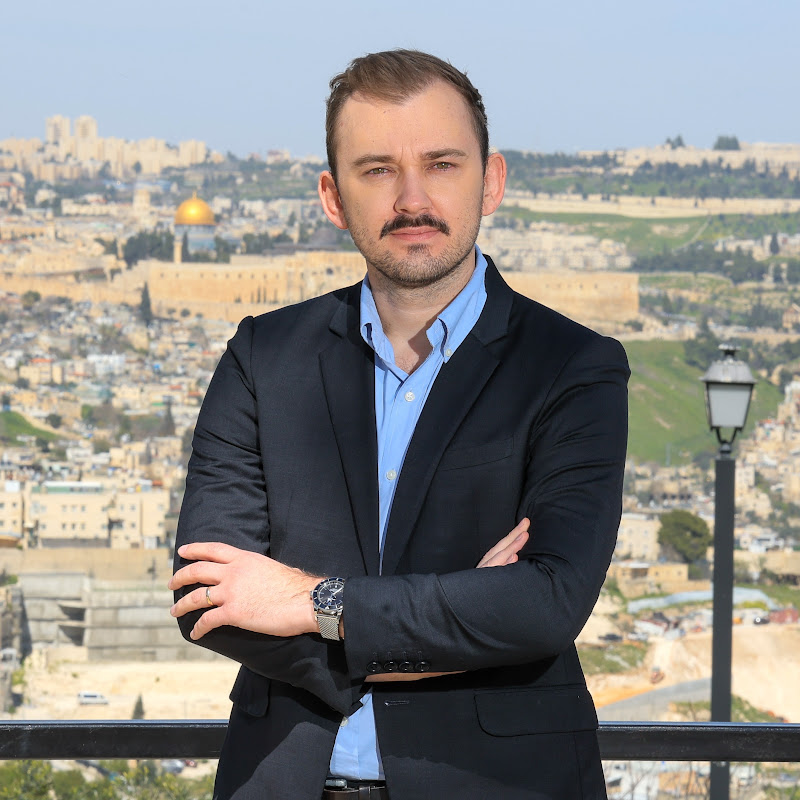
Transcript [00:00] That's your special finding, Hanania. [00:01] So, I may I may have found a coin. [00:07] >> [music] [00:08] >> This is the biggest archaeological crime [00:11] in human history, and almost no one is [00:14] talking about it. [music] In 1999, 6,000 [00:17] tons of soil were ripped out of the [00:19] holiest place on Earth, the Temple Mount [00:21] in Jerusalem, by bulldozers, with no [00:24] archaeologists, no cameras, and no [00:26] permission. [00:27] They hauled it away in trucks and dumped [00:30] it everything here in a valley like it [00:32] was trash. And the reason behind why [00:35] they did it is worse than the crime [00:37] itself. Shalom, friends. [00:39] >> [music] [00:39] >> I'm standing on a ridge above Jerusalem. [00:42] You can see the Temple Mount would be in [00:44] [music] that exact direction. This is [00:46] where Abraham bound Isaac, where Solomon [00:49] built the first Temple, where Jesus [00:51] taught, wept, and flipped the tables of [00:53] the money changers. For 3,000 years, [00:56] every single layer of this ground has [00:58] been soaked in biblical history. The [01:00] soil here is gray. This is the color [01:03] that because they took all the different [01:05] layers and they mixed them, [01:08] this is an actual this the color of the [01:10] destruction. The ash itself that colored [01:13] burnt ash that collect and actually [01:15] literally colored the entire soil of [01:17] Jerusalem and all the layers that we [01:19] have. Normally, archaeology happen on [01:21] the site. [01:27] But, this is what most Christians who [01:29] love Israel have never been told. The [01:31] Temple Mount today is controlled by an [01:34] Islamic religious trust called the Waqf. [01:37] And for decades, they have pushed a [01:39] political narrative that there was never [01:41] a Jewish Temple here. That Solomon is a [01:43] myth. That Herod's Temple never existed. [01:47] That the Jewish connection to this [01:48] mountain [music] is a fabrication. But, [01:51] there is one problem with that [01:52] narrative. The ground itself disagrees [01:55] with [music] them. Every inch of soil on [01:58] the Temple Mount is packed with physical [02:00] evidence. Hebrew inscriptions, priestly [02:02] seals, coins from Jewish kings, floor [02:06] tiles from Herod's Temple. It's evidence [02:09] [music] that the Bible is telling the [02:10] truth. [02:11] Evidence that you can hold in your own [02:13] hands. So, in 1999, [02:15] under the cover of building an [02:17] underground mosque, the Waqf brought in [02:19] heavy machinery and tore out thousands [02:22] of tons of that soil. They dumped it in [02:25] the Kidron Valley and walked away. [02:28] And if two Israeli archaeologists hadn't [02:30] shown up with their own trucks to rescue [02:32] [music] this, then every fragment of [02:35] this history behind me would have been [02:37] gone forever. This was an attempt to [02:39] erase the Bible from the ground it was [02:42] written on. And this [02:44] this is where the rescue happens. It's [02:47] called the Temple Mount Sifting Project. [02:49] The rules are simple. Every bucket of [02:51] that rescued soil gets washed, sifted, [02:54] and searched by hand, one rock at a [02:57] time. Because the bulldozers destroyed [02:59] the archaeological layers, you can't [03:01] date finds by depth anymore. The only [03:03] way to save what's left is to look at [03:05] every single stone. [03:07] So, after we fill up the buckets, [03:09] we are taking the buckets and Emma, now [03:11] would you help me? [03:13] And we are pouring in the mint. [03:17] And then we starting. Of course, we do [03:19] it with gloves and facial [03:23] and properly. It's difficult to do it [03:25] all of the sand. [03:27] And [03:30] after we finish through, [03:32] we are putting into the bucket [03:34] themselves. But, look, already we can [03:36] see parts of glass. This is a bit [03:38] modern. [03:39] We can start see a little bit of things [03:41] like clay. [03:43] We still This is a part of a of a [03:45] mosaic. [03:47] Okay, so we already see, but we not [03:48] stopping here because this is not our [03:49] job. People that will actually go [03:51] through and find out everything will be [03:53] you, will be other visitors that we [03:55] have. And this is how we actually go [03:57] through the entire massive amount of [04:00] soil that we have here. Moment of truth. [04:02] Let's say I'm going with the [04:05] with this, okay? Station. [04:10] Good job. [04:11] Now, give it a good wash. Okay. [04:14] I got to say, it's just crazy that we're [04:16] sifting through [04:18] possibly 3,000 years of soil. [04:21] We don't know what we're going to find. [04:23] So, we would like to have a good wash, [04:25] cuz Well, I already see this, but it's [04:28] probably not um [04:30] That's actually [04:31] Well, actually with Google Lens, you can [04:32] find out. This is a bowl. You see, it's [04:34] a serving bowl. [04:34] >> Yeah. Um all together, we dealing with [04:36] 127 different materials. So, we are [04:39] looking for for for pottery made out of [04:43] clay. We're looking for metal. [04:46] >> Yep, exactly. So, that's go to the [04:47] pottery pile. Okay. [04:49] >> Okay? We're looking for [04:51] um mosaic stones. Okay. So, this is a [04:54] plaster from the walls. That was a wall [04:57] few thousand years ago. [04:58] Maybe 2,000, maybe Wow. a bit more than [05:01] that, maybe less than that. There is a [05:03] chance that you'll find something. There [05:04] is a chance that you won't find [05:06] anything. Let's go with this one. [05:08] If I'm not finding a coin today, okay, I [05:11] don't know what I'm going to do. I don't [05:12] know what I'm going to do. Okay. [05:18] Yeah, yeah, yeah. You see? [05:19] >> Now, let's see what you can see [05:20] >> Okay, this is wood, I think. Do you see [05:21] any mosaic? [05:23] Um Mosaic normally would look like a [05:25] square, like pixels. Anybody that ever [05:27] played a Minecraft I don't know if this [05:29] is mosaic. Ah, this. [05:31] Wow. [05:33] Wow. So, we have a mosaic. We have a [05:35] mosaic. Majority part of the 3,000 year [05:37] story of the Temple Mount that [05:39] >> what's that? Metal? [05:41] Yes. Looks like uh [05:43] >> And and you can see it's bronze. You can [05:45] see the color. This is the rust of the [05:47] bronze. No, it definitely could be a [05:49] clip of a coin. Okay. So, it could be a [05:51] like a coin that was cut into quarters. [05:53] >> Oh, wow. Or broken. That's bronze. So, [05:55] that's a definitely a rust of the coin. [05:58] And [05:59] so, all together, we have 7,000 coins. [06:02] So, we have about another 2,000 coins [06:04] that we need to [06:06] to go. So, we have a project called [06:08] Adopt a Coin to see if anybody wants to [06:10] get to speed up the process, cuz it's [06:12] one day to clean it. So, That's crazy. [06:14] >> your special finding, Hanania. So, I may [06:17] I may have found [06:19] a coin. [06:20] A coin today. [06:22] So, this is This is insane. We Again, we [06:25] don't know exactly the date and the [06:26] exact history, but what's factual is [06:29] that here they were able to find uh [06:32] items and artifacts that date back [06:33] [music] thousands of years. That means [06:35] this fragment was on the Temple Mount [06:37] possibly when Jesus was. A priest may [06:39] have carried it. A pilgrim may have [06:41] dropped it. Someone was alive and [06:43] breathing and walking through the courts [06:45] of the [music] Temple, and they may have [06:47] held this. And now we are looking at it. [06:50] They've pulled arrowheads out of this [06:52] soil from the Babylonian army that [06:54] burned Solomon's Temple to the ground in [06:56] 586 BC. The exact event described in [07:00] Second Kings. [music] [07:01] They've pulled out floor tiles from the [07:04] courts of Herod's Temple, the same [07:06] ground Jesus [music] walked on. They've [07:08] found a clay seal stamped with the name [07:10] of the priestly family Immer, [07:13] a family named in the book of Jeremiah. [07:15] They have found Hebrew [music] coins, [07:16] Judean weights, silver half shekels from [07:19] the time of the Jewish revolt [music] [07:21] against Rome. Every one of these [07:24] artifacts is a fingerprint. [07:26] >> [music] [07:26] >> It says, "We were here. The Bible is [07:30] real." And these specific items that I'm [07:33] holding are clays that were found here [07:36] from the first Temple period. So, it's [07:38] just amazing that I'm holding [07:40] in my own hands thousands of years of [07:43] history. And here we found last week [07:45] um [07:46] inflation in the Byzantine era. [07:49] Wow. The coins are smaller, some of [07:51] them, and that's because of the value of [07:53] the money that went down. So, we can [07:55] actually see the story of inflation from [07:58] the Roman era to the Byzantine era. This [08:01] is a wall pavement, marble tile that [08:05] sits on the wall. And that's what hits [08:07] me standing here. The people who dumped [08:10] this soil [08:12] wanted it gone. They wanted the story [08:14] buried. They wanted the world to forget. [08:16] And instead, every bucket that gets [08:18] sifted, every shard of pottery that gets [08:21] pulled out of dirt, is another sentence [08:24] of the Bible being written back into the [08:26] ground. [08:26] >> [music] [08:27] >> You cannot erase truth because it comes [08:29] out of the dirt eventually. [08:32] I didn't expect to feel this. I thought [08:34] I was coming to a history site, but I'm [08:37] standing on the Mount of Olives, looking [08:39] across at the Temple Mount with the soil [08:41] of that mountain literally under my [08:44] fingernails. Before I came up here, I [08:46] wanted something I could take home with [08:48] me. Something I could look at when I [08:50] open my Bible, something I could give my [08:52] kids one day. And actually, today you [08:55] can do that. You're looking at [08:58] the Temple Mount soil. You can actually [09:02] grab [09:03] grab this and take it home with you. [09:05] This is soil, ashes from the Temple [09:08] Mount. It comes with a certificate. [09:11] There's a group in Israel that takes [09:12] this soil, rescued Temple Mount soil, [09:14] and makes it into beautiful pieces you [09:16] can wear. A necklace, a keepsake, a [09:19] fragment of the holiest ground on Earth [09:22] around your neck. It's in partnership [09:25] with this project here. So, I'll put the [09:27] link in the description. This is just [09:29] amazing. If you've ever wanted to hold [09:31] the history of the Bible in your hand, [09:33] this is as close as it gets. [09:36] It's just amazing. They tried to bury [09:39] our history, and we're pulling it back [09:42] out. So, it's just amazing. Visit the [09:44] Israel store [09:46] to get [09:47] original soil from the Temple Mount.